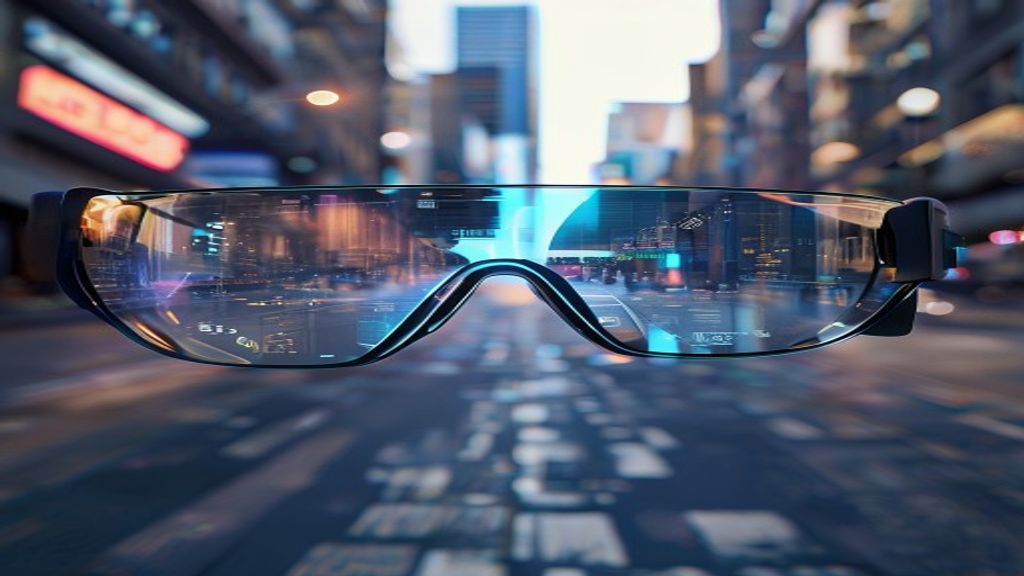
Augmented reality glasses are moving beyond sci-fi dreams and into real-world prototypes, product launches, and developer ecosystems. The promise is simple: digital information should appear where you look, fit naturally into your environment, and help you act faster—without pulling out a phone. But the future of AR glasses isn’t just about prettier visuals. It’s about computing that feels invisible, interfaces that adapt to people, and experiences that work reliably in everyday conditions.
In this article, we’ll explore where augmented reality glasses are headed next, what’s holding them back, and how they may change work, education, healthcare, entertainment, and daily life. Whether you’re a tech enthusiast or a business leader evaluating next-gen platforms, this is your roadmap to what comes after the hype cycle.
Why Augmented Reality Glasses Are Different From Phones and Wearables
Phones and smartwatches deliver information in a way that requires frequent attention shifts. You look down, tap, scroll, and then return to the real world. Augmented reality glasses aim to reduce friction by placing content directly into your field of view.
That seemingly small shift—moving information from a screen to your environment—has big implications:
- Hands-free interaction: Notifications, navigation, and instructions can appear without interrupting physical tasks.
- Context-aware experiences: Content can align with objects, locations, and surfaces around you.
- Faster comprehension: Visual overlays can clarify what you’re seeing (labels, highlights, translations) in real time.
- More natural workflows: Imaging and guidance can support learning, repairs, and medical procedures without constant device handling.
The Next Wave: Spatial Computing as the Real Goal
The future of augmented reality glasses is often described as “spatial computing.” The concept goes beyond showing an image in front of your eyes. Instead, the goal is to understand space—mapping environments, tracking motion, and anchoring digital elements to real-world coordinates.
Key capabilities shaping the future
- Spatial mapping and scene understanding: Glasses need to recognize surfaces, depth, and geometry to place overlays accurately.
- Low-latency tracking: If overlays lag behind your head movement, the experience feels broken. Future generations will emphasize speed and precision.
- Occlusion handling: Digital objects should appear behind real objects when appropriate, making AR look more believable.
- Consistent lighting and rendering: Overlays that match ambient light help the brain accept the effect.
As these capabilities improve, AR glasses shift from novelty to utility—helping users perform tasks with fewer steps and less cognitive load.
From Experimental Tech to Everyday Products
We’re still in the early phase, where prototypes prove feasibility and developers build demos. The next step is scaling reliability, comfort, and usability—so glasses feel like a durable product you wear, not a high-tech gadget you test.
Comfort and design will make or break adoption
To become mainstream, AR glasses must be wearable for extended periods. That means:
- Lightweight builds: Reducing weight and balancing hardware across the head.
- Thermal management: Preventing overheating from processing and optics.
- Battery life improvements: Ensuring you can use them for an entire day, not just a short session.
- Glare and eye comfort: Better displays, coatings, and adjustable brightness to reduce strain.
Design choices also influence user trust. People are more likely to adopt a device that looks clean, feels comfortable, and doesn’t constantly remind them they’re “wearing tech.”
Better Displays: The Optical Breakthroughs to Watch
AR glasses depend on optical systems that deliver clear visuals without blocking the real world. The industry is advancing on several fronts, including waveguides, microdisplays, and improved eye-tracking.
What future display improvements may look like
- Wider field of view: More peripheral coverage for realistic overlays.
- Higher brightness and contrast: Better visibility indoors and outdoors.
- Sharper text: A major hurdle for AR usability, especially for reading and UI interactions.
- Eye-tracked rendering: Rendering only where you’re looking can reduce power consumption and increase clarity.
The display stack is often described as a bottleneck, but progress is steady. As optics and microdisplays improve, AR glasses will support more demanding applications—like productivity tools and complex navigation prompts.
AI Is the Accelerator: Turning AR Into a Personal Interface
Augmented reality becomes exponentially more useful when paired with intelligent software. The future likely features on-device and hybrid AI that can understand what’s happening around you, interpret intent, and generate helpful overlays instantly.
How AI will enhance AR experiences
- Real-time object recognition: Identifying items, landmarks, and even steps in a process.
- Contextual assistance: Showing relevant information based on the environment and your actions.
- Natural language interaction: Speaking to your glasses to ask questions like, “What is this?” or “How do I replace this part?”
- Personalization: Adapting UI complexity, vocabulary, and guidance to the user’s preferences and needs.
However, the quality of AI matters. The future of AR glasses will not just be about “seeing.” It will be about understanding—and doing so with fewer errors.
Use Cases That Will Move From Vision to Habit
For adoption, AR glasses need to deliver everyday value. While entertainment and gaming will remain important, the biggest impact may come from practical applications that save time and reduce mistakes.
Work and productivity: overlays that eliminate friction
Imagine stepping into a warehouse and seeing pick locations highlighted on the shelves. Or attending a meeting where key diagrams float near the presenter and action items appear as you discuss them. In the workplace, future AR glasses could offer:
- Instructional overlays: Step-by-step guidance for complex tasks.
- Remote expert assistance: A colleague can see what you see and annotate the scene.
- Spatial documentation: Markups anchored to objects so instructions stay consistent.
- Navigation inside buildings: Better than “static maps,” because directions can adjust to your route.
Education: learning that feels hands-on
AR can transform how students experience concepts. Instead of reading about biology or physics, learners can observe 3D models aligned to their environment. The future of augmented reality glasses in education may include:
- Interactive anatomy and chemistry: Explaining internal structures and reactions with spatial visuals.
- Language learning: Real-time translation overlays on signs and objects.
- Guided labs: Safety reminders and procedural steps that reduce errors.
- Adaptive tutoring: Coaches that identify mistakes and correct them with visual cues.
When used well, AR can support different learning styles and help students build intuition rather than memorization.
Healthcare: from visualization to assistance
Healthcare is one of the most promising domains for AR glasses, partly because doctors and technicians rely on spatial understanding. While full autonomy isn’t the goal, AR can assist with real-time information and improved workflow.
Potential future benefits
- Clinician decision support: Overlaying relevant medical context during procedures.
- Training and simulation: Practicing procedures with guided overlays.
- Rehabilitation: Visual feedback for movement and technique.
- Medical translation: Helping staff communicate with patients in real time.
Privacy, safety, and validation will be critical here. The future will likely emphasize rigorous testing and regulated deployment.
Retail and services: personalized shopping in context
AR glasses can make product discovery more interactive. Instead of searching online and guessing how items fit in your space, future glasses could:
- Visualize products at scale: Show how furniture, decor, or electronics would look in a room.
- Offer guided upsell: Suggest compatible accessories based on your selections.
- Reduce returns: Better previews improve customer confidence.
- Provide service instructions: For repairs, setup, or maintenance tasks.
In services like home improvement, AR overlays could provide “just-in-time” tutorials as users install or troubleshoot items.
The Gaming and Entertainment Future: More Than a New Screen
Gaming will likely evolve into something closer to “play in your world.” AR glasses can blend digital characters, environments, and interactive objects with real spaces. The future may include:
- Spatial multiplayer games: Shared digital content anchored to locations.
- Fitness and rhythm experiences: Visual cues that respond to your movement.
- Live events overlays: Stats, camera angles, and interactive replays tied to the event environment.
To succeed, AR entertainment must be comfortable and low-friction—no constant adjustment or complicated setup.
Challenges the Industry Must Overcome
It’s easy to focus on the dazzling possibilities, but the future of augmented reality glasses depends on solving real challenges. Here are the major hurdles and why they matter.
Battery life, heat, and performance constraints
AR glasses pack displays, sensors, and compute power into a small form factor. That makes battery and thermal constraints a constant design battle. Future devices will need more efficient chips, smarter power management, and possibly more cloud-assisted processing—while still keeping latency low.
Latency and motion sickness risk
Even small delays between head movement and displayed content can cause discomfort. Improving tracking algorithms, sensor fusion, and rendering pipelines will be essential for creating a stable “locked” feeling.
Privacy and social acceptance
AR glasses can record video, capture audio, and recognize objects. That creates legitimate concerns. The future will require:
- Clear indicator lights: Signaling when the camera or sensors are active.
- On-device processing: Reducing the amount of raw data sent to servers.
- Better consent and control: Allowing users to manage what gets captured and for how long.
- Responsible design: Avoiding intrusive experiences that exploit other people’s environments.
Social trust is a prerequisite for mainstream adoption.
Content creation and developer ecosystems
Hardware progress is only half the equation. AR glasses need compelling applications, and building them is harder than traditional apps. The future will likely involve:
- Standardized AR frameworks: Tools that streamline development across devices.
- Spatial content pipelines: Easier ways to create, test, and publish 3D overlays.
- “Experience portability”: Ensuring content works consistently across locations and real-world conditions.
As developer toolkits mature, the variety and quality of AR experiences should increase.
The Roadmap: What the Next Few Years Could Look Like
While timelines vary by company and region, a realistic progression can be described in phases.
Phase 1: Practical overlays and companion features
Early mainstream versions will likely focus on helpful, limited interactions: navigation prompts, messaging summaries, translations, and basic object labels. These experiences rely on stable tracking and predictable UI patterns.
Phase 2: Context-aware assistance and spatial apps
Next, glasses will become better at understanding the scene. AI-driven overlays will guide users more naturally—turning AR into a “smart assistant” that responds to real-world context.
Phase 3: Shared spatial experiences and ambient computing
Over time, AR glasses may support shared environments where multiple people see consistent digital elements. That requires improved synchronization, mapping, and privacy safeguards. The most compelling experiences may feel less like apps and more like a new layer of reality.
How Businesses Should Prepare for the AR Glasses Future
If you’re a company exploring AR, it helps to plan for the constraints and opportunities early. The future of augmented reality glasses will favor businesses that build experiences around real workflows rather than flashy demos.
Start with high-value use cases
- Training and safety: Reduce mistakes and onboarding time.
- Field service and maintenance: Overlay instructions where work happens.
- Remote collaboration: Improve communication with spatial context.
Design for human factors
Great AR experiences consider attention, fatigue, and usability. UI design should keep information readable, actions clear, and visual clutter minimal.
Plan for data governance
Because AR can capture sensitive environments, companies should define how data is handled, stored, and protected. Strong governance becomes part of the product, not an afterthought.
What Could Be the Biggest “Breakthrough Moment”?
Most technology shifts happen when the device disappears into daily routine. For augmented reality glasses, the breakthrough could arrive when:
- Accuracy improves: Overlays align reliably in different lighting and environments.
- Interaction becomes effortless: People can control AR without complicated menus or repeated gestures.
- Content becomes abundant: Users find practical reasons to wear glasses, not just to test features.
- Trust is established: Clear privacy controls make social adoption feel safe.
When these elements converge, AR glasses may become as normal as earbuds—used frequently, understood intuitively, and constantly improving.
Conclusion: The Future Is Spatial, Practical, and Personal
The future of augmented reality glasses isn’t simply about displaying digital graphics. It’s about creating a new interface layer for the real world—one that understands context, reduces friction, and helps people learn, work, and connect more effectively.
As display optics improve, AI becomes more capable, and developer ecosystems mature, AR glasses will move from early experiments to everyday tools. The most successful applications will likely be the ones that deliver measurable value: fewer errors, faster learning, easier navigation, better collaboration, and more intuitive guidance in the moments that matter.
Augmented reality glasses are approaching a tipping point. The question is no longer whether the technology can work, but how quickly it can become trustworthy, comfortable, and useful enough to earn a place in your daily routine.
Frequently Asked Questions
Will augmented reality glasses replace smartphones?
In the near term, AR glasses are more likely to complement smartphones than replace them. They can reduce the need to look at a screen for certain tasks, while phones remain useful for heavy processing, media consumption, and setup.
Do AR glasses require constant internet access?
Some features will work better with connectivity, but the future likely includes more on-device processing for responsiveness and privacy. Hybrid approaches (on-device plus cloud) may become common.
What is the biggest challenge for mainstream AR glasses?
Comfort, battery life, display quality, and privacy concerns are all major factors. However, reliable low-latency spatial tracking and readable UI at a glance may be among the most critical technical hurdles.
How soon will AR glasses be widely available?
Availability will likely expand in waves. Early adoption may focus on productivity, enterprise, and specific consumer categories, followed by broader mainstream availability as costs drop and user experience improves.
document.head.appendChild(script);
document.head.appendChild(script);
document.head.appendChild(script);