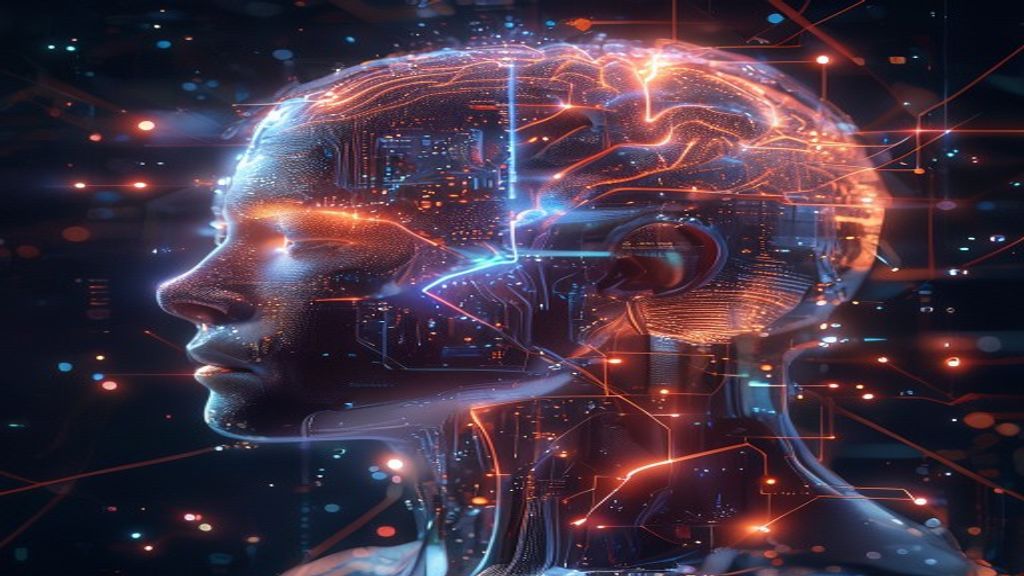
Brain-Computer Interfaces (BCIs) are moving from research labs into prototypes, clinical trials, and early consumer-era experiments. What once sounded like science fiction—controlling a cursor, typing with your mind, or restoring communication after paralysis—has begun to show credible, measurable progress. Yet the real story isn’t just that BCIs work. It’s what they could become next: faster, safer, more accurate, more personalized, and increasingly invisible in daily life.
In this article, we’ll explore the future of Brain-Computer Interfaces—from technical breakthroughs and new interface designs to ethical and regulatory challenges. If you’re curious about where BCI technology is headed and what it may mean for work, healthcare, accessibility, entertainment, and privacy, you’re in the right place.
What Brain-Computer Interfaces Are (and Why the Future Looks Different)
A Brain-Computer Interface is a system that converts brain activity into commands that computers or other devices can use. Depending on the approach, it may read signals from the scalp (non-invasive) or from implanted electrodes (invasive). The “brain” part can involve different signals—electrical activity, patterns in neural firing, or broader hemodynamic signals.
Historically, BCIs faced a major bottleneck: the signals are noisy, individuals differ widely, and real-time interpretation requires complex models. The future is about solving those issues in practical ways.
- Better signal quality through advanced sensing and signal processing
- More robust decoding using machine learning and improved calibration methods
- Closed-loop design that adapts as the user’s brain and the algorithm evolve
- Usability improvements that reduce training time and effort
- Safety and privacy-by-design to protect sensitive neural data
As these trends converge, BCIs shift from “demonstrations” toward reliable tools.
From Lab to Life: The Next Wave of BCI Breakthroughs
1) Non-Invasive BCIs Become More Powerful
Most people don’t want surgery to try a new technology. So the long-term momentum favors non-invasive systems—especially those using EEG (electroencephalography), as well as emerging approaches like improved magnetometry and other sensing modalities.
The near-future goal is not only higher accuracy but also higher consistency. Real-world environments introduce movement artifacts, changes in attention, and background electrical noise. The next generation of non-invasive BCIs aims to handle these realities through:
- Adaptive filtering that removes motion and noise artifacts in real time
- Sensor fusion combining multiple signal sources for stronger inference
- Personalized calibration that learns user patterns without lengthy setup
- Smarter user feedback that helps the brain learn how to generate decodable signals
2) Invasive BCIs Get Smaller, Safer, and More Stable
Implanted BCIs are already used in certain medical contexts, offering more precise signal access. The future likely brings:
- Improved electrode materials that reduce tissue reaction and maintain signal quality
- More biocompatible packaging to prolong lifespan
- Low-power electronics to reduce heat and support long-term stability
- Wireless systems that minimize cables and improve comfort
The key challenge is reliability over time. Brain signals can drift due to healing, long-term changes, and normal biological variability. Future invasive BCIs will increasingly use continual learning and ongoing recalibration to stay accurate.
3) AI Decoding Moves Toward Real-Time, Personalized Interpretation
Decoding brain signals is a computational problem: transform messy neural data into meaningful outputs. Today’s systems often rely on machine learning models that decode patterns for specific tasks. The future focuses on making those models:
- Faster so they support natural interactions
- More user-specific so accuracy improves with use
- More resilient so they work under varied conditions
- Interpretability-aware so engineers can diagnose failures
We can also expect more progress in hybrid approaches that combine prediction (what the user likely intends) with confirmation (what the system can infer with confidence). This can reduce “guesswork” and improve user trust.
What Will BCIs Actually Do in the Future?
When people think about BCIs, they often imagine mind-controlled games or typing without a keyboard. Those are important milestones, but the future impact will likely be broader and more practical—especially in healthcare and accessibility.
1) Communication That Feels Natural
For individuals who cannot speak or move effectively, BCIs could enable communication with greater speed and less friction. Instead of forcing users into rigid menus, future systems may:
- Allow fluid phrase generation
- Use contextual language models to reduce keystrokes
- Support multi-modal feedback (visual, auditory, or haptic)
- Adapt to fatigue and attention
The long-term goal is not just accuracy; it’s communication that respects the user’s pace.
2) Restoring Movement and Sensation
Another promising direction is motor assistance and neurorehabilitation. BCIs may be paired with:
- Robotic exoskeletons
- Prosthetic control systems
- Neurostimulation for training and therapy
In the future, a BCI could become part of a closed loop where the brain’s intention triggers assistance—and the user receives feedback that helps refine the neural pattern. Over time, this could improve both functional outcomes and comfort.
3) Medical Monitoring and Early Detection
BCIs aren’t always about commanding devices. Many systems can function as advanced monitors. By tracking neural signatures, future BCIs might support:
- Seizure risk assessment
- Attention and cognitive workload measurement
- Progress tracking for neurodegenerative conditions
- Personalized neuromodulation guidance
Even when the system isn’t controlling hardware, continuous neural insights could transform preventive medicine.
4) New Interaction Paradigms: Thought-Augmented Interfaces
In the far future, BCIs may not replace existing input methods—they may augment them. Imagine a workflow where:
- You think “summarize,” and the system adjusts content
- You focus on a region, and the interface prioritizes it
- You shift emotional or cognitive states, and the experience adapts automatically
This “thought-assisted” approach could lower risk. Instead of interpreting every mental intention as a command, the system might interpret states (attention, intent probability) to guide interactions.
The Role of Closed-Loop Systems: Feedback Will Be the Difference
One of the most important future trends is closed-loop BCI systems, where output changes based on the brain’s response—and the brain’s response changes based on the output. This loop can drastically improve decoding accuracy and usability.
For example, if a user is trying to select a letter, the system can adjust the stimulation pattern or visual feedback to increase the clarity of the neural response. Over sessions, the model learns which feedback style works best for that user.
In healthcare, closed-loop therapy could also help the nervous system learn healthier patterns. That’s particularly relevant for rehabilitation, where the process is as much about training and adaptation as it is about measurement.
Ethics, Safety, and Privacy: The Non-Negotiable Future Tasks
As BCIs move closer to everyday life, ethical considerations become central. Neural data is uniquely sensitive: it can reveal not only what someone does, but potentially aspects of cognition, emotion, and identity.
Neural Data Privacy and Ownership
Future BCI platforms will need clear answers to questions like:
- Who owns the raw neural signals?
- How is data stored, anonymized, or encrypted?
- Can the user revoke consent and delete data?
- What data can be used for training AI models?
A strong privacy approach may include on-device processing, differential privacy methods, and strict access controls. Without that, BCI adoption will face justified public resistance.
Consent, Autonomy, and “Mental Integrity”
BCIs should enhance autonomy, not undermine it. The future must ensure that systems do not:
- Manipulate choices covertly
- Trigger involuntary stimulation
- Use ambiguous intent signals to coerce outcomes
Many researchers argue for a concept often discussed as mental integrity: the right to keep internal mental states free from unauthorized intrusion. This may become a guiding principle for regulation.
Safety Standards for Stimulation and Implants
Invasive BCIs and neurostimulation carry physical and neurological risks. Future progress depends on robust safety frameworks, including:
- Long-term implant monitoring protocols
- Fail-safe behaviors in stimulation systems
- Rigorous trials with transparent outcome reporting
- Post-market surveillance and real-world performance assessments
Even non-invasive BCIs can raise safety questions, especially around prolonged use, signal intensities, and user comfort.
Regulation and Standards: From Experiments to Trusted Products
The future of BCIs isn’t only technological—it’s institutional. Governments and regulators will need to address:
- Clinical claims: what evidence supports accuracy, safety, and benefit?
- User risk: who is eligible, and under what monitoring?
- Algorithm transparency: how decoding failures are detected and handled
- Data protection: compliance with privacy laws and security best practices
Standardization will also help the ecosystem. If companies and research groups share benchmark tasks and reporting formats, it becomes easier to compare systems and set performance expectations.
BCIs in Work, Education, and Entertainment
While medical applications will drive early growth, the future may broaden into mainstream sectors.
Work: Safer Control in High-Stakes Environments
BCIs could support people in roles where manual control is difficult or risky—such as operating specialized equipment, managing attention-demanding systems, or assisting communication in critical situations.
However, workplace adoption will depend on reliability, training requirements, and clear boundaries for safety and responsibility.
Education: Adaptive Learning and Attention Coaching
In theory, BCIs could measure attention, engagement, and cognitive load to personalize learning. For example, an educational system might adjust pacing or content difficulty based on how learning is progressing.
But this raises ethical questions: students shouldn’t be profiled or pressured by cognitive-state metrics. The future of educational BCIs will require consent, transparency, and strong anti-discrimination safeguards.
Entertainment: New Genres of Interaction
BCI-based entertainment could evolve into experiences where users guide characters or environments with intent and focus. The more likely future isn’t full “mind control,” but a hybrid interaction where thoughts influence parameters while traditional input remains available.
As decoding becomes more stable, entertainment could become more immersive. Still, comfort, latency, and privacy will determine whether users embrace these systems.
The Roadmap: What Must Happen for BCIs to Become Mainstream?
The “future” of BCIs doesn’t arrive all at once. It’s built from milestones across hardware, software, and policy.
Hardware Requirements
- Higher signal fidelity in real environments
- Lower cost and more accessible devices
- Comfortable form factors for longer sessions
- Longevity and stability (especially for implants)
Software Requirements
- Improved decoding accuracy with fewer calibration steps
- Real-time performance with low latency
- Transparent error handling and graceful degradation
- Continual learning without compromising safety
Social and Policy Requirements
- Clear consent mechanisms and user rights
- Neural data governance and security standards
- Ethical review frameworks for new applications
- Regulatory pathways that support innovation while protecting users
Common Misconceptions About BCIs (and What’s Likely Next)
BCIs are often oversold or misunderstood. Here are a few common misconceptions that shape public expectations:
- Misconception: BCIs can read thoughts like movies. In reality, most systems infer patterns correlated with intent or state, not literal text-from-mind.
- Misconception: Non-invasive BCIs will immediately replace invasive ones. Non-invasive options may become excellent for specific tasks, but certain medical goals may still require implant-level signal access.
- Misconception: Accuracy is everything. Usability, training time, reliability under stress, and safety are equally important for adoption.
The most meaningful future is incremental: better interfaces, better models, better safety, and better human-centered design.
Conclusion: A Future Built on Trust, Adaptation, and Human-Centered Design
The future of Brain-Computer Interfaces will likely be defined by three themes: capability, adaptation, and trust.
Technically, BCIs will become more accurate through improved sensing, smarter decoding, and closed-loop feedback. Practically, they’ll expand beyond “control” into monitoring, rehabilitation, and thought-augmented interaction. Ethically, the success of BCIs will depend on privacy, consent, and safety standards that protect mental integrity.
If we build BCIs that are reliable, transparent, and user-centered, the technology can do more than replace inputs—it can restore independence, unlock communication, and reshape the way humans collaborate with machines. The next era won’t just be about what BCIs can do. It will be about how respectfully, safely, and effectively they fit into real human lives.
document.head.appendChild(script);
document.head.appendChild(script);