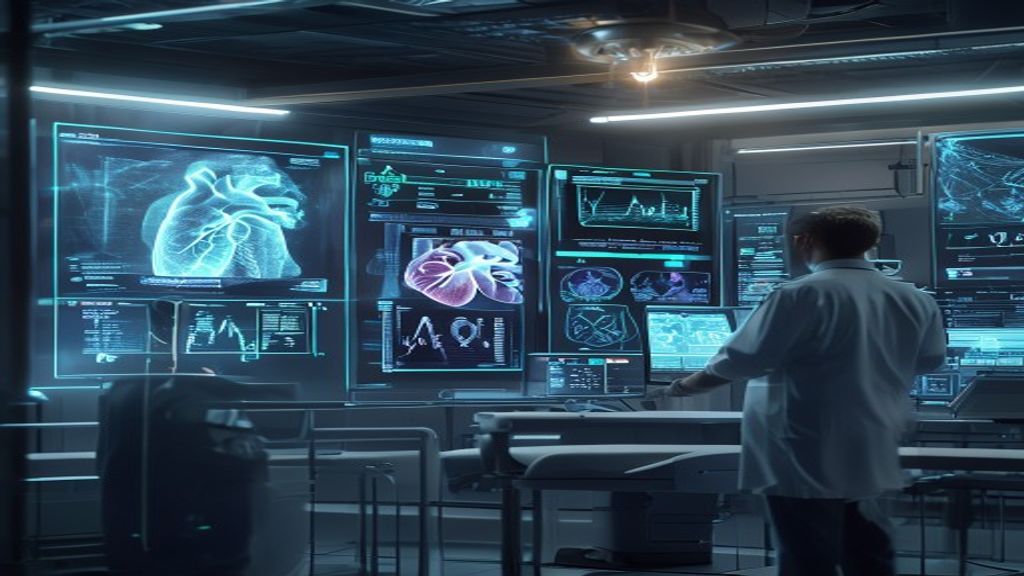
Deep learning is transforming healthcare by turning complex medical data—like images, signals, genomes, and clinical notes—into actionable insights. From helping clinicians detect disease earlier to improving patient outcomes and streamlining operations, deep learning models are moving beyond research labs and into real-world clinical workflows.
In this post, we’ll explore the top 5 deep learning applications in healthcare. Each section highlights what the technology does, why it matters, and the practical impact you can expect as these systems mature.
Why Deep Learning Is Taking Over Healthcare
Traditional machine learning often struggles when data is high-dimensional or unstructured. Deep learning, powered by neural networks, can automatically learn patterns from:
- Medical imaging (X-rays, CT, MRI, pathology slides)
- Physiological signals (ECG, EEG, vital signs time series)
- Genomic data (DNA sequences and variant patterns)
- Clinical text (doctor notes, discharge summaries)
- Wearable and remote monitoring data
This capability makes deep learning especially valuable in healthcare where accuracy, speed, and interpretability can directly affect diagnosis and treatment decisions.
1) Medical Imaging: Faster, More Accurate Diagnosis
One of the most visible deep learning applications is computer-aided detection and diagnosis for medical imaging. Convolutional neural networks (CNNs) and vision transformers can analyze images at a granular level, identifying patterns that may be subtle to the human eye.
Common imaging use cases
- Radiology: Detecting pneumonia, fractures, pulmonary nodules, hemorrhage, and more.
- Oncology: Detecting tumors and quantifying lesion sizes in CT, MRI, and mammography.
- Pathology: Classifying cancer types from whole-slide images and grading tumor aggressiveness.
- Cardiology imaging: Supporting assessment of heart function using ultrasound or cardiac MRI.
How it improves outcomes
Deep learning can reduce time-to-diagnosis and support more consistent readings. In many clinical settings, the model acts as a second reader, flagging suspicious regions and prioritizing urgent cases.
That speed can matter immensely for conditions like stroke or internal bleeding—where imaging interpretation must happen quickly.
What to watch for
- Generalization: Models must perform reliably across different scanners, hospitals, and patient populations.
- Bias: Training data quality strongly impacts fairness and accuracy.
- Regulatory readiness: Clinical validation and monitoring are essential before deployment.
2) Risk Prediction and Clinical Decision Support
Healthcare decisions are often probabilistic: “How likely is it that this patient will deteriorate?” Deep learning improves risk prediction by analyzing complex relationships across time—especially when combined with electronic health record (EHR) data.
Examples of deep learning-driven prediction
- Sepsis risk prediction from labs, vitals, and clinical context.
- Readmission likelihood after discharge.
- Hospital-acquired complications such as acute kidney injury or pressure injuries.
- Frailty or deterioration forecasting in older adults.
Why it works
Recurrent neural networks (RNNs), long short-term memory (LSTM), and more recent architectures like transformers can model sequences of events. Instead of treating each lab result as isolated, the model learns how trajectories evolve—such as rising creatinine or worsening oxygen levels.
Clinical impact
When used correctly, these systems help clinicians intervene earlier:
- More timely orders for confirmatory tests
- Earlier treatment initiation
- Better resource allocation (ICU beds, nurse staffing, etc.)
Importantly, the strongest systems emphasize decision support, not fully automated decisions. The clinician remains responsible while the model provides guidance.
Best practices
- Integrate into workflow (EHR integration matters)
- Use explainability techniques where possible
- Perform ongoing monitoring to detect performance drift
3) Personalized Medicine Through Genomics and Precision Oncology
Precision medicine aims to tailor treatment to individual patients. Deep learning plays a key role by extracting meaningful signals from genomic and biological data—domains where relationships can be highly non-linear.
What deep learning does with genomics
- Variant interpretation: Predicting the potential impact of genetic mutations.
- Drug response prediction: Estimating how a patient might respond to therapies.
- Survival analysis: Forecasting outcomes based on molecular signatures.
- Protein and pathway modeling: Identifying interactions linked to disease mechanisms.
Precision oncology in action
Oncology is a natural fit for deep learning. Tumor behavior is influenced by numerous molecular factors—gene expression profiles, mutation patterns, and epigenetic changes. Deep learning can combine these signals to improve:
- Cancer subtype classification
- Treatment selection support
- Prognostic stratification
While genomics has been data-rich for years, deep learning helps convert that data into clinically useful predictions.
Challenges in precision medicine
- Data scarcity for rare diseases: Models can struggle with underrepresented conditions.
- Interpretability: Clinicians often need mechanistic understanding.
- Ethical considerations: Privacy, consent, and responsible handling of sensitive genetic information are critical.
4) Deep Learning in Medical Imaging Workflow Automation (Beyond Detection)
When people think of imaging AI, they often focus on detection. But deep learning also powers workflow automation that makes healthcare systems run smoother—reducing bottlenecks and improving throughput.
Automation use cases you’ll see more often
- Image segmentation: Outlining organs, tumors, and lesions automatically to speed up treatment planning.
- Radiotherapy planning support: Estimating volumes and contours to reduce manual labor.
- 3D reconstruction and measurement: Transforming 2D scans into accurate 3D representations.
- Quality assurance: Detecting unusable scans and advising adjustments.
Why workflow matters
Even when detection accuracy is high, healthcare still depends on process quality: preparing data, validating measurements, and ensuring consistent protocols. Deep learning can standardize many of these steps.
For example, tumor segmentation can significantly reduce time for oncologists and technicians, allowing more time for patient-specific decisions.
Benefits for both clinicians and patients
- Lower administrative and annotation burden
- More consistent measurements across clinicians and sites
- Shorter time from diagnosis to treatment initiation
In many hospitals, this type of application is one of the fastest paths to measurable operational improvement.
5) Wearable and Remote Patient Monitoring: Early Alerts and Continuous Care
Healthcare increasingly happens outside hospitals. Deep learning is a cornerstone for remote monitoring—using signals from wearables and home devices to detect health changes early.
What data deep learning can analyze
- ECG signals: Detecting arrhythmias or irregular heart rhythms.
- PPG signals (photoplethysmography): Tracking heart rate variability and circulatory changes.
- Respiratory patterns: Monitoring breathing abnormalities.
- Activity and sleep metrics: Identifying risk trends related to chronic conditions.
Use cases in chronic and acute care
- Cardiac monitoring: Detecting atrial fibrillation risk and triggering timely follow-ups.
- Chronic disease management: Supporting heart failure and COPD care through trend alerts.
- Post-operative monitoring: Flagging signs that suggest complications before they escalate.
How it supports clinicians
Instead of overwhelming teams with raw data, deep learning can summarize patterns and produce actionable alerts. For many providers, the value lies in reducing noise and prioritizing what needs attention.
Key implementation considerations
- Alert fatigue: Systems must be tuned to avoid frequent false positives.
- Device variability: Models should account for different sensors and data quality.
- Privacy and security: Remote data must be protected end-to-end.
What These Top 5 Applications Have in Common
Although each application targets a different clinical challenge, they share a set of themes that determine whether deep learning succeeds:
- High-quality data: Better labels, better coverage, and better preprocessing lead to better models.
- Real-world validation: Performance must be tested in the environments where care actually happens.
- Human-centered design: Tools should align with clinician workflows and responsibilities.
- Monitoring and governance: Models can drift over time, so continuous evaluation is necessary.
Common Concerns and How Healthcare Teams Address Them
Accuracy and reliability
Healthcare can’t afford frequent errors. Strong development practices include rigorous validation, subgroup performance checks, and continuous post-deployment monitoring.
Interpretability
Many medical settings require explanation. Techniques like heatmaps for imaging, feature attribution for tabular data, and careful reporting of model uncertainty can help.
Ethics and bias
Data bias can lead to unequal performance. Mitigation includes diverse training datasets, fairness evaluation, and transparent reporting.
Privacy and compliance
Patient data must be handled with appropriate safeguards. Many organizations also explore privacy-preserving approaches and strict access control policies.
What’s Next for Deep Learning in Healthcare
We’re moving toward deeper integration of AI into everyday clinical systems. Expect to see:
- More multimodal models that combine imaging + EHR + genomics
- Better personalization using patient-specific context
- More regulation-friendly workflows with clear validation and monitoring
- Automation of administrative burdens via language understanding and document processing
The pace of progress is fast, but the winners will be the solutions that demonstrate safety, reliability, and measurable benefits for patients and providers.
Conclusion
The top 5 deep learning applications in healthcare—imaging diagnosis, risk prediction, precision genomics, imaging workflow automation, and wearable remote monitoring—share one goal: transforming complex data into better decisions. Whether the model is helping detect disease sooner, forecasting risk earlier, or enabling continuous care at home, the direction is clear.
As hospitals and health systems continue adopting these technologies, the most impactful solutions will be those that combine technical performance with clinical validation, transparency, and responsible deployment.
Ready to explore more? If you’re building or evaluating a healthcare AI strategy, start by mapping use cases to measurable outcomes (time-to-diagnosis, reduced complications, improved consistency) and plan for rigorous validation from day one.
document.head.appendChild(script);
document.head.appendChild(script);