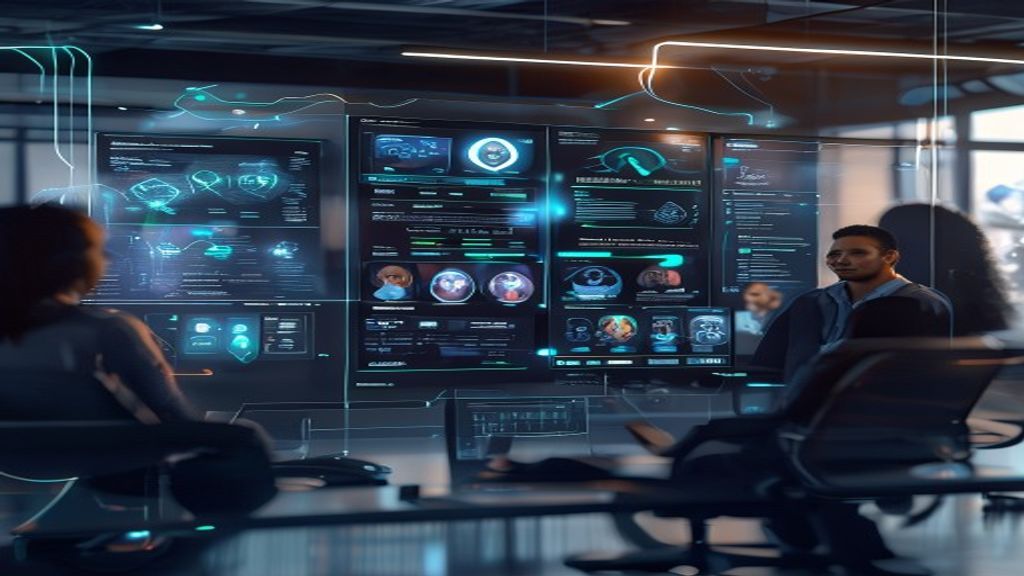
AI is no longer a futuristic buzzword—it’s reshaping how organizations hire, onboard, develop, and retain talent. From automated resume screening to data-driven workforce planning, artificial intelligence is changing the day-to-day realities of HR and recruiting teams worldwide. But the shift isn’t just about speed and automation. It’s also about making hiring more consistent, improving candidate experiences, and enabling HR leaders to make better decisions with less guesswork.
In this article, we’ll explore how AI is changing the landscape of HR and recruiting, what’s driving adoption, where the benefits show up first, and the risks organizations must manage to ensure fairness, privacy, and trust.
Why AI Is Reshaping HR and Recruiting Now
AI adoption in HR has accelerated because multiple capabilities have matured at once:
- Natural language processing (NLP) makes it possible to understand and analyze text in resumes, cover letters, job descriptions, and employee feedback.
- Machine learning helps identify patterns in talent data to support predictions like candidate-job match likelihood.
- Automation at scale reduces time spent on repetitive screening, scheduling, and administrative tasks.
- Better integrations with HRIS, ATS, CRM, and communication tools make it easier to deploy AI in real workflows.
As a result, HR and recruiting are shifting from largely manual processes to increasingly data-informed and AI-assisted operations.
1) AI-Powered Talent Sourcing: Finding Candidates Faster (and Smarter)
Traditional sourcing can be labor-intensive: search for keywords, filter profiles, review relevance, and send outreach. AI tools streamline much of this by using intent and skill signals rather than relying solely on exact keywords.
What AI changes in sourcing
- Smarter matching: AI can match candidates to roles based on skills, experience patterns, and transferable competencies.
- Expanded reach: Systems can identify talent across broader networks and repositories, not just direct applicants.
- Personalized outreach: AI can help tailor messages based on candidate background and job requirements.
The net effect is often reduced time-to-shortlist and a more proactive recruiting model.
2) Resume Screening and Candidate Matching: From Keyword Filters to Predictive Insights
Resume screening is one of the most visible uses of AI in recruiting. Instead of only ranking resumes by keyword overlap, modern AI platforms analyze content for meaning—extracting skills, mapping experience to requirements, and flagging relevant evidence.
Key advantages
- Higher throughput: Recruiters can review a curated shortlist instead of manually triaging hundreds of applicants.
- Consistency: Screening criteria can be standardized across roles, reducing human variability.
- Improved relevance: AI can interpret synonyms and related skills (e.g., ‘data visualization’ vs. ‘dashboarding’).
However, predictive matching should never be treated as a final decision engine. High-quality screening still requires human oversight to validate suitability and ensure ethical evaluation.
3) Enhanced Candidate Experience: AI Chat, Faster Responses, and Better Scheduling
Candidates today expect responsiveness. AI is making it easier for recruiters to deliver immediate support at scale.
Where candidate experience improves
- AI chat assistants answer FAQs about job requirements, timelines, and benefits.
- Automated scheduling coordinates interviews and reduces back-and-forth emails.
- Personalized updates keep candidates informed about next steps.
When used thoughtfully, these improvements reduce candidate drop-off and enhance perceptions of the employer brand—especially for high-volume or high-competition roles.
4) Interview Support and Structured Evaluations
AI is also influencing how interviews are conducted. Rather than replacing interviewers, many tools support them with structured frameworks.
Common AI-supported interview workflows
- Interview question suggestions aligned with job competencies.
- Rubric-based evaluations that help interviewers score candidates more consistently.
- Summarization of notes to reduce administrative burden and improve clarity.
Structured evaluation is especially important because it helps standardize assessments and can reduce bias relative to purely subjective processes.
5) Job Description Optimization: Attract the Right Candidates
Job descriptions impact both who applies and what applicants expect. AI can help optimize job postings for clarity, inclusivity, and match quality.
How AI improves job posts
- Skill extraction: Ensure required skills and responsibilities are explicit and unambiguous.
- Language refinement: Reduce jargon or overly narrow phrasing that can discourage qualified applicants.
- Better role realism: Align expectations with actual responsibilities and growth opportunities.
This is particularly valuable for organizations competing for talent who may not meet overly rigid interpretations of experience.
6) Workforce Planning and Predictive Analytics for HR
Recruiting is only one piece of HR. AI is expanding into workforce planning—helping HR leaders forecast hiring needs, identify capability gaps, and design reskilling strategies.
Examples of HR use cases
- Demand forecasting based on business growth, attrition trends, and project pipelines.
- Skills-based planning that focuses on competencies rather than job titles.
- Retention risk signals derived from engagement, performance, and internal movement patterns.
These capabilities allow HR teams to shift from reactive hiring to proactive workforce strategy.
7) Learning and Development: Personalized Upskilling at Scale
AI can improve employee development by recommending learning paths based on role goals, skill gaps, and career aspirations.
How AI changes L&D
- Skills gap analysis identifies where employees may need support to advance.
- Personalized training recommendations match content to individual needs and timelines.
- Progress tracking helps HR measure adoption and outcomes.
In a world where job roles evolve quickly, personalized learning helps organizations maintain competitiveness.
8) HR Automation: Administrative Tasks, Policy Q&A, and Employee Self-Service
Another major shift is HR automation. Instead of routing every request to HR teams, AI can handle routine questions and administrative workflows.
Common HR automation wins
- Policy Q&A for benefits, leave, and internal procedures.
- Ticket triage that routes requests to the right department.
- Form support for onboarding, documentation, and compliance steps.
While automation can’t replace HR judgment, it can reduce workload and free HR professionals to focus on employee experience and strategic initiatives.
9) Bias, Fairness, and Compliance: The Critical Challenges
AI in recruiting can offer benefits—but it can also introduce or amplify bias if not governed correctly. Hiring outcomes depend on data quality, model design, and ongoing monitoring.
Key risks to manage
- Biased training data reflecting historical hiring patterns that may be unfair.
- Proxy discrimination where non-sensitive factors correlate with protected attributes.
- Opaque decision-making that makes it difficult to explain why a candidate was ranked a certain way.
- Privacy concerns around candidate data handling and storage.
To mitigate these risks, organizations should pursue transparent evaluation methods, bias audits, explainability, and clear human oversight. Legal and compliance review is also essential, especially across regions with differing employment laws.
10) Data Privacy and Candidate Consent: Build Trust First
AI systems often process sensitive personal data. That makes privacy a core HR responsibility, not a technical afterthought.
Best practices for privacy
- Limit data collection to what’s necessary for hiring decisions.
- Use secure storage and access controls to protect candidate information.
- Provide clear disclosures about how AI is used and what candidates can expect.
- Establish retention schedules aligned to policy and regulations.
When candidates understand how AI is used—and when it’s used responsibly—trust improves.
11) Human-in-the-Loop Hiring: Why AI Should Support, Not Replace
One of the most effective ways to adopt AI responsibly is to keep humans involved at decision points. AI can assist with analysis and prioritization, while human teams make final judgments.
Practical ways to implement human-in-the-loop
- Human review of shortlists and ongoing feedback loops to refine models.
- Structured scoring rubrics that interviewers apply consistently.
- Appeal or reconsideration paths when candidates believe decisions were inaccurate.
This approach reduces risk while preserving the strategic and relational nature of recruiting.
12) Measuring Success: Beyond Time-to-Hire
AI adoption should be evaluated with metrics that reflect both business outcomes and candidate experience. Organizations that only track time-to-hire may accidentally optimize for speed at the expense of quality and fairness.
Suggested HR and recruiting metrics
- Quality of hire (performance and retention indicators after onboarding).
- Candidate experience metrics (response time, drop-off rates, satisfaction surveys).
- Process efficiency (time-to-shortlist, recruiter workload hours saved).
- Diversity and fairness metrics (representation, selection rates, and auditing outcomes).
- Model performance (accuracy, calibration, and drift monitoring).
These metrics help HR leaders understand whether AI is truly improving hiring outcomes.
What the Future Looks Like: Skills-First, Automation Everywhere, and More Personalized HR
AI is pushing HR toward a skills-first future. Rather than relying solely on degree requirements or job title matching, organizations increasingly value demonstrated capabilities and learning agility.
Over time, expect a few trends to accelerate:
- More personalized candidate journeys driven by intelligent communication and adaptive selection stages.
- Wider use of skills intelligence to power matching, internal mobility, and learning pathways.
- Greater automation in HR workflows for onboarding, compliance support, and employee self-service.
- Stronger governance around fairness, transparency, and privacy as regulations evolve.
The big opportunity is not merely to hire faster—it’s to build teams more effectively and support employees with better development experiences.
How to Get Started: A Responsible AI Adoption Roadmap
If you’re exploring AI for HR and recruiting, a careful rollout plan can help you capture benefits while controlling risk.
Steps to follow
- Identify high-impact workflows: Start with sourcing, screening assistance, scheduling, or HR ticket triage.
- Define success metrics: Decide what improvement means (quality, speed, fairness, candidate satisfaction).
- Ensure governance: Create policies for data handling, model monitoring, and human approval steps.
- Run pilot programs: Test with real roles and gather recruiter feedback before scaling.
- Audit outcomes: Regularly review selection rates and performance to detect bias or drift.
In most cases, the best outcomes come from combining AI capabilities with recruiter expertise, structured processes, and a strong ethics framework.
Conclusion: AI Is Redrawing the HR and Recruiting Playbook
AI is changing the landscape of HR and recruiting in powerful ways—from faster sourcing and smarter screening to better candidate experiences and more proactive workforce planning. At the same time, responsible adoption matters more than ever. Organizations must address fairness, transparency, privacy, and human oversight to ensure that AI strengthens hiring rather than undermining trust.
The future of recruiting isn’t AI replacing HR—it’s AI augmenting HR. When implemented thoughtfully, AI can help teams make better decisions, improve employee outcomes, and build more diverse, capable organizations for the long term.
document.head.appendChild(script);
document.head.appendChild(script);