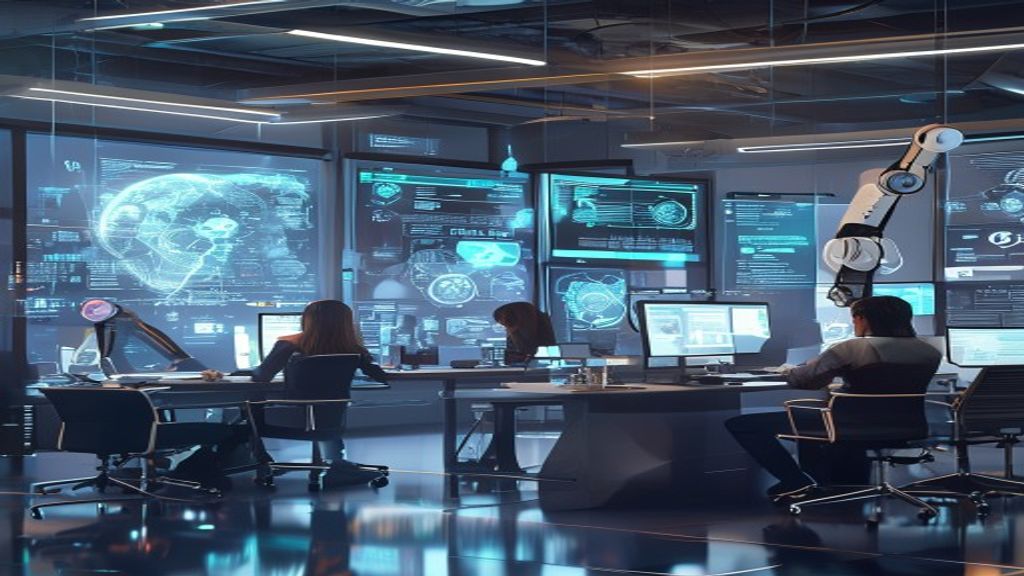
The year is 2026. Your alarm rings, but instead of the usual rush to the office, you leisurely sip your coffee as an AI assistant provides a real-time update on your marketing campaigns. Sounds like science fiction? Not for long. The rapid evolution of Artificial Intelligence is not just augmenting marketing teams; it’s on a direct path to fundamentally redefining them. While the idea of ‘replacing’ an entire team might sound dramatic, the reality is that many core functions currently performed by humans are becoming increasingly automatable, efficient, and cost-effective when handled by advanced AI tools. This isn’t about fear-mongering, but foresight – understanding the landscape shifts to prepare, adapt, and thrive.
For years, AI has been whispered about as a ‘support’ tool. Today, it’s graduating from assistant to autonomous operator. By 2026, the marketing world will witness a dramatic pivot, driven by a new generation of AI tools capable of handling everything from content creation and SEO optimization to ad campaign management and customer service. These aren’t just incremental improvements; they are paradigm shifts. Let’s explore the 10 AI tools (or categories of tools) that are set to disrupt, and potentially displace, traditional marketing roles within the next few years.
The Rise of Autonomous Marketing: Where AI Takes the Wheel
1. Generative AI for Content Creation: The Automated Wordsmith
Gone are the days when content creation was a purely human endeavor. Advanced generative AI models, like future iterations of GPT and similar language models, are now capable of producing high-quality, engaging, and SEO-optimized articles, blog posts, social media captions, email copy, and even full marketing collateral at a scale and speed unimaginable for a human team. These tools can analyze vast datasets of successful content, understand brand voice, and adapt writing styles to specific audiences. They can even incorporate real-time trends and keywords to ensure maximum impact.
- Replaces: Copywriters, Bloggers, Social Media Content Creators, Email Marketing Specialists.
- Why it will win: Speed, scalability, cost-efficiency, ability to generate diverse content variations for A/B testing, and consistent brand messaging across all platforms.
2. AI-Powered SEO & SERP Optimization: The Algorithmic Strategist
SEO is no longer just about keywords; it’s about understanding complex algorithms and user intent. Next-gen AI SEO tools will move beyond simple keyword suggestions to autonomously analyze search engine result pages (SERPs), identify gaps in competitor strategies, generate optimized content briefs, and even make real-time adjustments to website structure and internal linking. They’ll predict algorithm updates, pinpoint opportunities for featured snippets, and ensure your content ranks without constant manual oversight.
- Replaces: SEO Specialists, Keyword Researchers, Content Strategists focused on organic reach.
- Why it will win: Unmatched analytical power, predictive capabilities, continuous optimization, and the ability to process and act on vast amounts of real-time ranking data.
3. Autonomous Social Media Management: The Digital Engagement Bot
Imagine an AI that not only schedules your posts but also generates the content, designs visuals, identifies optimal posting times based on audience behavior, responds to comments, manages community interactions, and even runs micro-campaigns – all while learning and adapting. Future AI social media managers will monitor trends across platforms, identify viral opportunities, and execute nuanced engagement strategies, making human social media managers largely redundant for day-to-day operations.
- Replaces: Social Media Managers, Community Managers, Social Media Strategists (for execution).
- Why it will win: 24/7 operation, hyper-personalization of engagement, rapid trend identification, and data-driven content optimization.
4. AI-Driven Ad Campaign Optimization: The Precision Spender
PPC and display advertising require constant monitoring, bidding adjustments, audience segmentation, and creative testing. AI tools are already excelling here, but by 2026, they will autonomously manage entire ad portfolios. These systems will predict campaign performance, allocate budgets across channels for maximum ROI, dynamically generate ad copy and visuals tailored to micro-segments, and continuously A/B test every variable in real-time – far beyond human capacity.
- Replaces: PPC Specialists, Media Buyers, Ad Creative Designers, Performance Marketing Managers.
- Why it will win: Superior ROI through hyper-optimization, elimination of human error, real-time adaptation to market changes, and unbiased data-driven decisions.
5. AI for Hyper-Personalized Email Marketing & CRM: The Intelligent Conversationalist
Email marketing and CRM efforts will be transformed by AI that can craft individual emails, subject lines, and calls to action based on each subscriber’s unique behavior, preferences, and journey stage. These tools will segment audiences dynamically, predict churn risk, identify upselling opportunities, and even initiate multi-channel follow-ups autonomously. They will mimic human empathy and understanding, creating truly personalized customer experiences at scale.
- Replaces: Email Marketing Specialists, CRM Managers, Marketing Automation Specialists.
- Why it will win: Unprecedented personalization, increased engagement rates, automated lead nurturing, and predictive customer journey management.
6. AI-Powered Analytics & Predictive Modeling: The Data Oracle
Marketing data is overwhelming. AI analytics platforms will not only process and visualize data but will also identify hidden patterns, predict future trends, forecast campaign outcomes with high accuracy, and autonomously recommend strategic shifts. These tools will go beyond descriptive reporting to prescriptive action, telling marketers not just what happened, but what will happen and what to do about it. This will make many traditional data analyst roles obsolete for day-to-day reporting and insights.
- Replaces: Marketing Data Analysts, Business Intelligence Specialists, Marketing Strategists (for data interpretation).
- Why it will win: Deeper insights, proactive problem-solving, real-time performance monitoring, and superior strategic guidance.
7. AI for Dynamic Video & Image Generation: The Creative Automaton
Creating compelling visuals and videos is time-consuming and expensive. By 2026, AI tools will be able to generate professional-grade images, animations, and even short marketing videos from simple text prompts. They’ll adapt visual styles to brand guidelines, create multiple variants for testing, and even tailor content to specific audience demographics – all without a designer or videographer’s direct involvement in asset creation. This revolutionizes how quickly brands can respond to trends with fresh, engaging visuals.
- Replaces: Graphic Designers (for marketing assets), Video Editors (for short-form marketing content), Creative Agencies (for high-volume asset creation).
- Why it will win: Rapid asset production, immense cost savings, endless creative variations, and on-demand visual content generation.
8. Advanced AI Chatbots & Conversational Marketing: The 24/7 Sales & Support Agent
Today’s chatbots are rudimentary compared to what’s coming. By 2026, AI-powered conversational agents will seamlessly handle customer inquiries, provide personalized recommendations, qualify leads, close sales, and even offer post-purchase support with human-like empathy and understanding across websites, apps, and messaging platforms. These aren’t just script-followers; they are sophisticated problem-solvers capable of complex dialogues and proactive engagement.
- Replaces: Customer Service Representatives, Sales Development Representatives, Lead Qualification Specialists.
- Why it will win: Instant 24/7 support, consistent brand voice, scalable lead generation, and highly efficient sales funnel management.
9. AI for Market Research & Trend Forecasting: The Strategic Seer
Understanding market dynamics, competitor strategies, and consumer sentiment traditionally requires extensive research. Future AI tools will continuously scan global data – news, social media, financial reports, academic papers – to identify emerging trends, predict market shifts, and analyze competitor moves with unprecedented accuracy. They’ll provide real-time strategic insights, making dedicated market research teams less essential for ongoing monitoring and forecasting.
- Replaces: Market Researchers, Competitive Intelligence Analysts, Trend Forecasters.
- Why it will win: Comprehensive data analysis, early trend detection, reduced research costs, and rapid strategic adaptation.
10. AI-Powered Website & Landing Page Optimization: The Digital Architect
Building and optimizing websites and landing pages to convert is a continuous process. By 2026, AI tools will design, build, and autonomously optimize entire web experiences. They’ll analyze user behavior, A/B test layouts, copy, and CTAs in real-time, personalize content for individual visitors, and even identify and fix technical SEO issues – all without direct human intervention. This moves beyond simple A/B testing platforms to truly adaptive web design and optimization.
- Replaces: UX Designers (for optimization), Web Developers (for routine updates and A/B testing), Conversion Rate Optimization (CRO) Specialists.
- Why it will win: Continuous improvement, hyper-personalization of web experiences, rapid iteration, and superior conversion rates.
The Evolving Role of the Human Marketer
Does this mean human marketers are obsolete? Absolutely not. While these AI tools will take over the repetitive, data-intensive, and even creative execution tasks, the role of the human marketer will evolve, becoming more strategic, empathetic, and innovative. Marketers will become the architects of AI systems, the curators of brand voice, the ethical guardians, and the visionary strategists who define the ‘why’ and ‘what if’ that AI cannot replicate.
Success in this new era won’t come from resisting AI, but from embracing it. It will mean focusing on:
- Strategic Oversight: Designing the overarching marketing vision and ensuring AI aligns with business goals.
- Ethical & Brand Guardianship: Ensuring AI-generated content and campaigns maintain brand integrity and ethical standards.
- Creative Innovation: Pushing the boundaries of what’s possible, identifying entirely new marketing frontiers that AI can then execute.
- Human Connection: Focusing on the intangible aspects of human connection, storytelling, and empathy that AI, no matter how advanced, will struggle to fully replicate.
- AI Tool Management & Development: The skill to select, integrate, and train these sophisticated AI platforms will be paramount.
Conclusion: Adapt or Be Automated
The marketing landscape of 2026 will be unrecognizable to many operating today. The 10 AI tools outlined above represent a seismic shift, automating functions once considered core human responsibilities. This isn’t a threat to the industry but a transformation. Marketing teams won’t disappear; they’ll transform into leaner, more strategic units leveraging AI as their super-powered workforce.
The time to adapt is now. Marketers who embrace these technologies, upskill in AI strategy and oversight, and focus on uniquely human strengths will not just survive but thrive in the automated era. The future isn’t about humans vs. machines; it’s about humans intelligently leveraging machines to achieve unprecedented marketing success. Are you ready for the revolution?
document.head.appendChild(script);
document.head.appendChild(script);
document.head.appendChild(script);