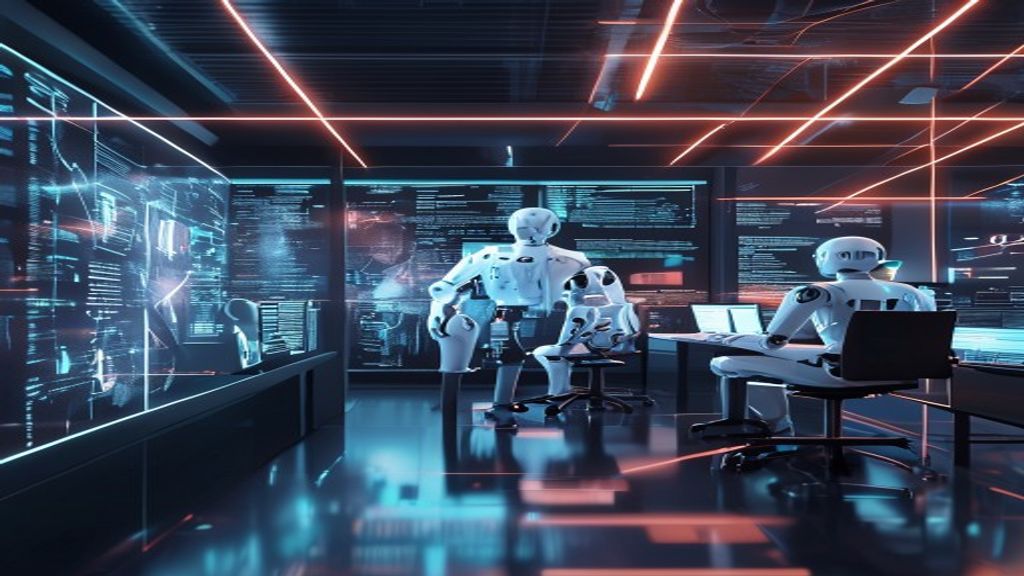
The year is 2023. Buzzwords like ‘AI,’ ‘machine learning,’ and ‘automation’ dominate marketing conferences and boardrooms. But what if we told you these aren’t just buzzwords, but harbingers of a seismic shift? A shift so profound that by 2026, entire marketing teams, as we know them, could be largely replaced by an army of sophisticated artificial intelligence tools? It’s a bold claim, perhaps even a terrifying one for many professionals, but the pace of AI innovation suggests it’s a future we need to confront head-on.
For decades, marketing has been a blend of creativity, strategy, data analysis, and human connection. We’ve seen technology enhance these elements, from email marketing platforms to social media analytics. Yet, the current wave of AI isn’t just enhancing; it’s replicating, optimizing, and often surpassing human capabilities in tasks once thought exclusive to skilled marketers. From crafting compelling ad copy to predicting customer behavior with uncanny accuracy, AI is evolving at an exponential rate. The question isn’t if AI will change marketing, but how drastically it will redefine the very structure of marketing teams.
This article dives deep into 10 groundbreaking AI tools and categories that are rapidly advancing towards a point where they can perform the functions of multiple marketing roles. While the human element will always hold value, the sheer efficiency, scalability, and data-driven precision these tools offer mean a lean, AI-augmented team could soon outperform a traditional, human-heavy department. Prepare to explore the future where algorithms manage campaigns, robots write content, and intelligent systems predict your next big market move long before you do.
The AI Revolution in Marketing: More Than Just Automation
To understand how AI can “replace” a marketing team, we must first distinguish between simple automation and true artificial intelligence. Automation streamlines repetitive tasks; AI, on the other hand, learns, adapts, and makes autonomous decisions. Modern AI marketing tools are not just following rules; they are analyzing vast datasets, identifying patterns, generating insights, and executing strategies with a speed and scale impossible for humans alone. This paradigm shift means AI isn’t merely a helper; it’s becoming an architect, a strategist, and an executor.
Imagine an AI that can:
- Write a compelling blog post in minutes, perfectly optimized for SEO.
- Design a stunning ad creative tailored to individual user preferences.
- Launch, monitor, and optimize an entire global ad campaign without human intervention.
- Predict the exact products a customer will buy next with 90%+ accuracy.
- Provide instant, personalized customer support across multiple channels, 24/7.
These aren’t futuristic fantasies; they are capabilities already emerging or fully realized in various forms. Let’s explore the specific AI powerhouses that are paving the way for a redefined marketing landscape by 2026.
1. AI Copywriters & Content Creators: The End of Writer’s Block
For decades, crafting compelling copy, engaging blog posts, and persuasive ad creatives has been the domain of human wordsmiths. Copywriters, content strategists, and even journalists have honed their skills over years. Enter AI tools like Jasper, Copy.ai, Writesonic, and even advanced iterations of large language models (LLMs) like GPT-4 and beyond. These platforms can generate high-quality, original content across virtually any format – from catchy headlines and product descriptions to entire long-form articles, social media updates, and email sequences – often in mere seconds.
How they replace: These AI tools learn from vast amounts of existing text, understanding tone, style, and effective persuasive techniques. They can produce content tailored to specific target audiences, SEO keywords, and brand voices. By 2026, a single AI content suite could draft initial versions of all marketing copy, requiring only minimal human oversight for final review and brand alignment, effectively reducing the need for large teams of dedicated copywriters and content creators.
Replaced Roles: Copywriters, Content Writers, Bloggers, some Content Strategists.
2. Predictive SEO & Keyword Intelligence Platforms: The Algorithm Whisperers
SEO (Search Engine Optimization) is a complex, ever-evolving field requiring deep analytical skills, market research, and a keen understanding of search engine algorithms. SEO specialists traditionally spend countless hours on keyword research, competitor analysis, backlink strategies, and technical audits. However, AI-powered platforms such as Surfer SEO’s content editor, MarketMuse, and advanced features within SEMrush or Ahrefs are revolutionizing this space.
How they replace: These AI tools don’t just report on current SEO performance; they predict future trends, identify untapped keyword opportunities, and even generate content briefs optimized for ranking. They can analyze competitor strategies at scale, audit technical SEO issues automatically, and provide real-time recommendations for on-page optimization. By 2026, a single AI system could manage an organization’s entire SEO strategy, from initial research to content optimization and performance tracking, significantly diminishing the need for a dedicated team of SEO experts.
Replaced Roles: SEO Specialists, Keyword Researchers, Technical SEO Auditors.
3. Autonomous Social Media Managers: Beyond Scheduling
Social media management is more than just posting updates; it involves strategy, content creation, community engagement, and performance analysis. Traditional social media managers curate content, schedule posts, monitor trends, respond to comments, and analyze engagement. AI is transforming this beyond simple automation.
How they replace: Emerging AI tools (like advanced versions of Buffer, Hootsuite, and even newer AI-first platforms) can now generate social media content (text and visuals), identify optimal posting times, analyze audience sentiment, and even engage with followers in a brand-consistent voice. They can detect trending topics and automatically create relevant content, personalize interactions, and run A/B tests on posts to maximize reach and engagement. By 2026, an autonomous AI could manage multiple social media channels, handling everything from content creation and scheduling to real-time interaction and crisis monitoring, rendering most manual social media management roles obsolete.
Replaced Roles: Social Media Managers, Community Managers, Social Media Content Creators.
4. Hyper-Personalized Email & CRM Automation: The Nurturing Narrators
Email marketing and CRM (Customer Relationship Management) are pillars of customer retention and lead nurturing. Email marketers craft segments, design campaigns, write copy, and analyze open rates, while CRM managers oversee customer data and journey mapping. The level of personalization required for truly effective campaigns has always been a significant human effort.
How they replace: AI-powered CRM systems (e.g., Salesforce Einstein, HubSpot AI) combined with advanced email platforms can segment audiences dynamically based on real-time behavior, predict next best actions, and automatically generate hyper-personalized email content and subject lines. They can map out entire customer journeys, trigger automated communications, and even adapt messaging based on individual user responses. By 2026, these integrated AI systems will manage lead nurturing, customer onboarding, and retention campaigns with minimal human input, delivering a level of personalization and efficiency impossible for human teams to achieve at scale.
Replaced Roles: Email Marketers, CRM Managers, Marketing Automation Specialists.
5. Programmatic Advertising & Bid Optimization Engines: The Ad Spend Scientists
Running effective paid advertising campaigns requires constant monitoring, bidding adjustments, audience segmentation, and creative optimization. PPC (Pay-Per-Click) specialists and media buyers dedicate their time to maximizing ROI across platforms like Google Ads, Meta Ads, and various ad exchanges.
How they replace: AI has already made significant inroads here with smart bidding strategies and automated campaign optimization. By 2026, these engines will become fully autonomous. They will not only manage bids and budgets in real-time but also dynamically generate ad creatives, identify the most profitable audience segments, allocate spend across platforms for optimal reach, and even predict campaign performance with unprecedented accuracy. A single AI platform will be able to manage a global portfolio of ad campaigns, learning and adapting faster than any human team, thus rendering the majority of manual media buying and PPC management roles redundant.
Replaced Roles: PPC Specialists, Media Buyers, Ad Campaign Managers.
6. AI-Driven Market Research & Consumer Insights Tools: The Data Diviners
Understanding the market and consumer behavior is fundamental to any successful marketing strategy. Traditionally, this involves extensive surveys, focus groups, data analysis, and trend spotting – a labor-intensive process performed by market researchers and data analysts.
How they replace: AI tools are transforming market research by analyzing vast, unstructured datasets from social media, customer reviews, news articles, and competitive intelligence reports. They can identify emerging trends, pinpoint consumer sentiment, segment audiences based on complex behavioral patterns, and even predict shifts in demand. Platforms equipped with natural language processing (NLP) and predictive analytics can deliver actionable insights almost instantaneously. By 2026, these AI insights engines will provide comprehensive market intelligence and consumer profiles on demand, eliminating the need for large human research departments and allowing for incredibly agile strategic adjustments.
Replaced Roles: Market Researchers, Data Analysts (specializing in consumer insights).
7. Dynamic Web & Landing Page Optimizers: The Conversion Architects
Optimizing websites and landing pages for conversions is a continuous process involving A/B testing, user experience (UX) analysis, and content adjustments. CRO (Conversion Rate Optimization) specialists and even some front-end developers focus on improving user journeys and maximizing conversion rates.
How they replace: AI-powered CRO platforms are moving beyond simple A/B testing. They can dynamically personalize website content, layouts, and call-to-actions for individual visitors in real-time, based on their browsing history, demographics, and behavior. These tools automatically identify friction points, suggest design improvements, and run multivariate tests at scale, constantly learning and improving the user experience to maximize conversions. By 2026, an AI system will be able to autonomously manage and optimize an entire website’s user journey and conversion funnels, making many traditional CRO roles redundant as the AI becomes the primary architect of conversion optimization.
Replaced Roles: CRO Specialists, UX/UI Designers (for basic optimization tasks).
8. Advanced Video & Image Generation Suites: The Visual Virtuosos
Visual content – images, graphics, and videos – is crucial for engaging audiences across all marketing channels. Creating high-quality visual assets requires skilled graphic designers, video editors, and animators, often with significant time and resource investments.
How they replace: AI image generators (like Midjourney, DALL-E 3) and video generation platforms (like Synthesys, Pictory, Descript’s AI features) are rapidly advancing. They can create stunning, original visual content from simple text prompts, generate realistic virtual models, animate characters, and even edit videos with automated precision. These tools can produce branded assets, marketing collateral, social media visuals, and even short promotional videos at an unprecedented speed and scale. By 2026, a single AI visual suite could handle the vast majority of an organization’s visual content needs, significantly reducing the reliance on human design and video production teams.
Replaced Roles: Graphic Designers, Video Editors, Animators (for marketing content).
9. Omnichannel Customer Experience AI: The Always-On Advocates
Providing seamless, consistent customer support and experience across various channels (chat, email, social, phone) is a massive undertaking for customer service and sales support teams. Ensuring a personalized and helpful interaction 24/7 is a logistical challenge.
How they replace: AI-powered chatbots and virtual assistants are becoming incredibly sophisticated, capable of understanding complex queries, retrieving relevant information, and even performing transactions. Integrated into an omnichannel strategy, these AIs can manage initial customer inquiries, resolve common issues, qualify leads, and guide customers through the sales funnel across all touchpoints. They learn from every interaction, constantly improving their responses and efficacy. By 2026, an advanced CX AI could handle the majority of customer interactions, escalating only the most complex cases to human agents, thereby drastically reducing the need for large customer service and sales support teams.
Replaced Roles: Customer Service Representatives, Sales Support, Community Engagement Specialists (for queries).
10. Full-Stack Marketing Orchestration AI: The Autonomous Strategist
Beyond individual tools, the ultimate game-changer is an AI that can integrate, manage, and optimize an entire marketing ecosystem. This ‘meta-AI’ would oversee all the functions described above, acting as a central brain for marketing operations.
How they replace: Imagine an AI that not only generates content but also publishes it, optimizes its SEO, promotes it across social channels, runs targeted ads for it, tracks its performance, analyzes the market response, and then adjusts the overall strategy – all autonomously. This orchestrating AI would handle budgeting, resource allocation, and even identify new market opportunities. While still in nascent stages, the convergence of specialized AI tools means that by 2026, sophisticated marketing orchestration platforms could manage entire campaigns and strategies from conception to execution, drastically reducing the need for traditional marketing managers, directors, and even some strategic roles who primarily oversee execution rather than truly innovate.
Replaced Roles: Marketing Managers, Marketing Directors (focused on execution), Campaign Strategists (for routine campaigns).
The Human Element: Adaptation, Not Annihilation
The prospect of AI replacing entire marketing teams can be daunting, even alarming. However, it’s crucial to inject nuance into this discussion. While AI excels at data processing, optimization, and scalable execution, it still lacks genuine human creativity, emotional intelligence, strategic foresight based on abstract reasoning, and the ability to build authentic relationships that transcend algorithms.
The future marketing team in 2026, while significantly leaner, will likely be composed of highly skilled professionals who:
- Govern AI: Overseeing AI operations, ensuring brand consistency, ethical considerations, and compliance.
- Innovate & Strategize: Focusing on high-level strategy, identifying entirely new market opportunities, and pioneering creative campaigns that AI cannot yet conceive.
- Build Relationships: Nurturing high-value client relationships, managing partnerships, and engaging in deep, empathetic customer interactions.
- Interpret & Translate: Translating AI insights into human-centric strategies and communicating complex data in understandable terms.
- Problem-Solve Creatively: Tackling unforeseen challenges and developing solutions that require out-of-the-box thinking.
Rather than outright replacement, the shift will be towards augmentation and redefinition of roles. Marketers will evolve from task executors to AI wranglers, strategic visionaries, and relationship builders. The demand for purely operational roles will diminish, while roles requiring critical thinking, complex problem-solving, and emotional intelligence will become paramount.
Conclusion: Embrace the Future or Be Left Behind
The technological currents are undeniable. The rapid advancements in AI are not just incremental improvements; they represent a fundamental transformation of how marketing is conceived, executed, and measured. By 2026, the notion of a traditional, human-heavy marketing department may well seem archaic.
For individuals, this means a pressing need to upskill, focusing on AI literacy, data interpretation, strategic thinking, and uniquely human capabilities. For businesses, it’s a call to action: start integrating AI strategically now, invest in training, and begin restructuring your marketing operations to harness these powerful tools. Those who embrace this AI-driven evolution will unlock unprecedented efficiency, personalization, and growth, while those who resist risk being outmaneuvered by leaner, smarter, and faster competitors.
The future of marketing isn’t just about AI; it’s about intelligent collaboration between humans and machines. The question isn’t whether AI will replace parts of your marketing team, but how quickly you’ll adapt to ensure your team is leading the charge into this exciting new era.
document.head.appendChild(script);
document.head.appendChild(script);
document.head.appendChild(script);